
Dental Care
Dental Exams in Lincoln, AR
Welcome to Smithers Animal Hospital-Lincoln, where dental exams are the starting point of every dental care plan we make for dogs and cats.
Understanding Pet Dental Exams
Your pet can’t tell you when a tooth hurts, and many dogs and cats keep eating normally even when their mouth is sore. A dental exam is how we find problems early, before they turn into pain, infection, or lost teeth.
Oral disease in pets starts the same way it does in people. Bacteria in the mouth form plaque that sticks to the teeth. If it isn’t removed, plaque hardens into tartar and can lead to gingivitis and periodontitis. Once the gums and the tissues around the teeth are inflamed, those bacteria can reach the rest of the body and affect organs such as the kidneys, heart, and liver.
That’s why we recommend starting regular dental exams while your pet is young. Catching a fractured tooth, a retained baby tooth, or early gum disease gives your pet the best chance at a healthy, comfortable mouth for years to come.

What to Expect at Your Pet’s Dental Exam
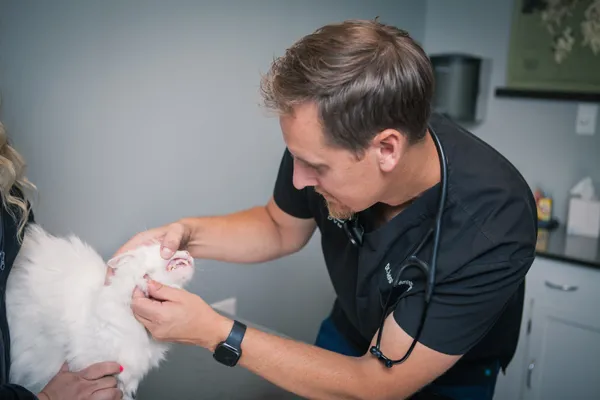
A dental exam is a careful look at your pet’s whole mouth, not just a quick glance at the front teeth.
Your Pet’s History
We’ll ask about any changes you’ve noticed at home, like bad breath or trouble chewing.
What We Look For
During the exam, our team checks for fractured teeth, worn areas of enamel, retained baby teeth, plaque, tartar, inflammation of the gums (gingivitis), abnormal growths or masses, tooth discoloration, infected teeth, and more.
Talking Through the Results
After the exam, we’ll explain what we found and let you know whether further treatment is needed. That might be an ultrasonic cleaning and polishing, or, for a tooth that can’t be saved, an extraction. If your pet’s mouth looks healthy, we’ll talk about how to keep it that way.
Care Between Visits
Brushing your pet’s teeth between cleanings and offering oral hygiene chews are simple ways to slow plaque from building back up.

Why Regular Dental Exams Matter for Your Pet
Every dog and cat benefits from regular dental checkups. We recommend dental checkups and cleanings at least every 1 to 2 years in most cases, and some pets need them more often. Don’t wait for your next scheduled visit if you notice any of these signs:
- Bad breath
- Trouble eating. Abnormal chewing, drooling, or dropping food from the mouth
- Bleeding from the mouth
- Broken or loose teeth
- Gum changes. Gum swelling or recession
- Pawing at the face or mouth
- Appetite changes. Reduced appetite, refusal to eat, or weight loss
- Swelling of the face
- Teeth that are discolored or covered in tartar
A dental exam is one part of our complete dental care for pets in Lincoln, Prairie Grove, Farmington, Summers, and beyond.
Schedule Your Pet’s Dental Exam Today
A quick look now can spare your pet pain later. Let our team check your pet’s teeth and gums.
Call us at (479) 824-3299 or visit us at 2157 E Pridemore Dr. in Lincoln. We’re open Monday through Thursday 7:30am–5:30pm and Friday 7:30am–5:00pm.
Dental Exams: Frequently Asked Questions
How often does my pet need a dental exam?
In most cases, we recommend dental checkups and cleanings at least every 1 to 2 years. Some pets need them more often, especially those with a history of tartar or gum problems. Your pet’s regular physical exam is also a good time for us to take a look at their teeth.
What are the signs my pet may have a dental problem?
Common signs include bad breath, drooling, dropping food, pawing at the mouth, bleeding gums, loose or broken teeth, facial swelling, and a reduced appetite or weight loss. Many pets hide mouth pain, so a pet who is still eating can still have a painful tooth. If you notice any of these signs, give us a call.
Why does dental health matter for my pet’s overall health?
Plaque and tartar lead to inflamed gums and periodontal disease. When the tissues around the teeth are inflamed, bacteria from the mouth can enter the bloodstream and may affect organs such as the kidneys, heart, and liver. Keeping your pet’s teeth and gums healthy is one of the best ways to protect their overall health.
Can I help prevent dental disease at home?
Yes. Brushing your pet’s teeth with a toothpaste made for pets is the most effective home care. Dental chews and other oral hygiene products can also help slow plaque buildup. Home care works best alongside regular exams and professional cleanings, since it can’t remove tartar that has already hardened on the teeth.
How do I schedule a dental exam for my pet and what are your hours?
Call us at (479) 824-3299 or visit us at 2157 E Pridemore Dr. in Lincoln. We’re open Monday through Thursday 7:30am–5:30pm and Friday 7:30am–5:00pm. Let us know if you’ve noticed any signs of mouth pain so we can see your pet sooner.