
Diagnostic Care
Heartworm & Parasite Testing in Lincoln, AR
Welcome to Smithers Animal Hospital-Lincoln, where heartworm and parasite testing is part of our in-clinic diagnostic laboratory, giving dogs and cats a complete check for the parasites that threaten their health and your family’s.
Understanding Heartworm & Parasite Testing
Parasites are one of the most common health threats for dogs and cats, and many of them cause harm long before you notice anything is wrong. Heartworms are spread by mosquito bites and live in the heart and lungs, where they can cause serious, lasting damage. Intestinal parasites such as roundworms, hookworms and whipworms can rob your pet of nutrients, and some of them can also spread to people.
This page covers the full parasite screen, inside the bloodstream and the gut. For a closer look at heartworm disease on its own, visit our heartworm testing page.
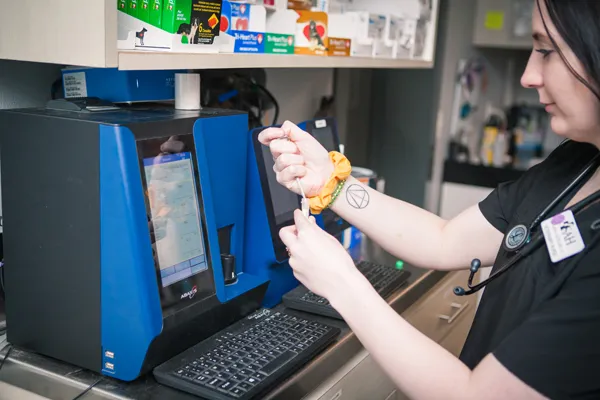
Running these tests in-house means quick turnaround, so our veterinarian can give you an answer and start treatment on the same day when a problem turns up. Regular testing also confirms that your pet’s prevention is doing its job.

What to Expect During Your Pet’s Testing
A full parasite check usually takes two small samples. Here’s how it works:
Heartworm Testing
Heartworm testing uses a small blood sample. A pet can be infected for months before showing signs, so a test is the most reliable way to know, and it’s important to confirm a pet is heartworm-free before starting or restarting prevention.
Intestinal Parasite Testing
Checking for intestinal parasites usually involves a small, fresh stool sample. We look for the eggs and other signs of worms and other parasites that you can’t see with the naked eye.
Results in the Clinic
Both tests are run in our in-house laboratory, so in most cases we can share results during or soon after your visit.
Next Steps
If a test comes back positive, our veterinarian will explain what was found, recommend treatment and talk with you about prevention to help keep it from happening again. Our team is always glad to answer your questions along the way.

Why Parasite Testing Protects Your Pet and Family
Every dog and cat can benefit from parasite testing, including indoor pets, since mosquitoes and other parasites can find their way inside. It’s especially important for puppies and kittens, newly adopted pets, pets that spend a lot of time outdoors and pets with diarrhea, weight loss, coughing or low energy.
- Catches infections early, often before your pet shows any signs
- Confirms prevention is working, even if a dose was missed or late
- Protects your household, since some intestinal parasites can spread to people
- Same-day answers from our in-house laboratory
- Keeps boarding plans on track, since all boarders are required to be up to date on their shots and parasite free
We recommend annual diagnostic testing for our patients, and heartworm and parasite checks fit easily into your pet’s yearly exam. Planning a stay with us? Learn more about boarding. Heartworm and parasite testing is one part of our in-clinic diagnostics, alongside bloodwork, tick-borne disease testing, urinalysis and more.
Schedule Your Pet’s Parasite Screening Today
Testing is easy to add to your pet’s annual check-up. If we need a stool sample, ask us when you call how to collect and bring a fresh one.
Call us at (479) 824-3299 or visit us at 2157 E Pridemore Dr. in Lincoln. We’re open Monday through Thursday 7:30am–5:30pm and Friday 7:30am–5:00pm.
Heartworm & Parasite Testing: Frequently Asked Questions
How do pets get heartworms?
Heartworms are spread by mosquitoes. When an infected mosquito bites a dog or cat, it can pass along immature worms that travel through the body and settle in the heart and lungs as they grow. Because mosquitoes are so common, any pet can be exposed, which is why regular testing and prevention are recommended.
Why does my pet need a heartworm test if it’s already on prevention?
Testing confirms the prevention is working. A missed or late dose, or a pet that spits out a pill, can leave a gap in protection. It’s also important to confirm a pet is heartworm-free before starting or restarting prevention, because an existing infection needs to be addressed by your veterinarian first.
Can my pet’s worms spread to my family?
Some intestinal parasites that affect dogs and cats, such as roundworms and hookworms, can also infect people, and children are often at higher risk. Regular parasite testing and treatment for your pet, picking up after pets promptly and good handwashing all help protect everyone in your home.
Can cats get heartworms too?
Yes. Cats can be infected by the same mosquitoes that carry heartworms to dogs, and indoor cats aren’t completely protected since mosquitoes can get inside. Heartworm disease looks different in cats and can be harder to spot, so talk with our veterinarian about testing and prevention for your cat.
How do I schedule heartworm and parasite testing and what are your hours?
Call us at (479) 824-3299 to book a visit, or stop by 2157 E Pridemore Dr. in Lincoln. Testing is easy to add to your pet’s annual check-up. If we need a stool sample, ask us when you call how to collect and bring a fresh one. We’re open Monday through Thursday 7:30am–5:30pm and Friday 7:30am–5:00pm.