
Diagnostic Care
FeLV/FIV Testing in Lincoln, AR
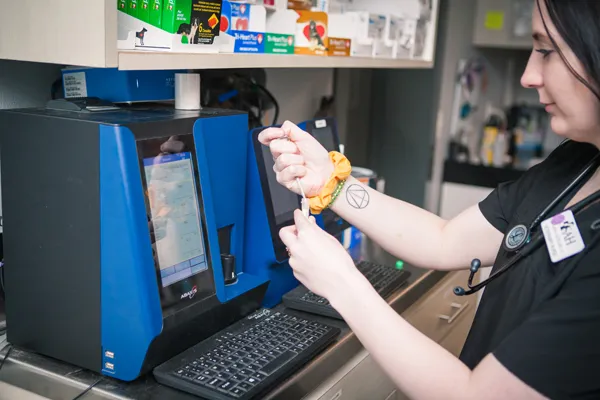
Welcome to Smithers Animal Hospital-Lincoln, where tests for feline leukemia and FIV are part of our in-clinic diagnostic laboratory, so you can know your cat’s status and plan the best care.
Understanding FeLV/FIV Testing
Feline leukemia virus (FeLV) and feline immunodeficiency virus (FIV) are two of the most important viral infections in cats. Both weaken the immune system over time, leaving a cat more open to other infections and illnesses. FeLV spreads mainly through close contact, such as mutual grooming and shared food and water bowls, while FIV spreads mostly through deep bite wounds.
An infected cat can look perfectly healthy for a long time, so testing is the only way to know a cat’s status. The quick turnaround of our in-house testing means you get answers sooner and our veterinarian can start planning your cat’s care right away.
FeLV/FIV testing is one part of our in-clinic diagnostics, which also include bloodwork, parasite testing, urinalysis and more.
What to Expect at Your Cat’s Visit
We handle cats gently and work to keep the visit as calm as possible. Here’s what happens:
A Small Blood Sample
FeLV/FIV testing uses a small blood sample, and it’s often done during a regular exam.
Understanding the Result
A negative result is good news. If a result is positive, our veterinarian may recommend confirming it, since a single test doesn’t always tell the whole story, especially in young kittens.
Retesting When Needed
Very recent exposures may not show up right away, so retesting later is sometimes advised.
Planning Ahead
Many cats with FeLV or FIV can live comfortably with good care. We’ll talk with you about keeping your cat healthy, regular checkups and how to protect other cats in your home.
Why Every Cat Should Know Its FeLV/FIV Status
Testing is especially important for newly adopted cats and kittens, cats joining a household with other cats, cats that go outdoors or fight with other cats, and cats that are sick or have been bitten.
- Protects other cats at home by testing a new cat before introductions
- Guides your cat’s care, from checkups to how quickly we treat other illnesses
- Quick in-house results, so you aren’t left waiting for answers
- Informs vaccine decisions, which our veterinarian can discuss along with your cat’s vaccinations
- A lifestyle-based retesting plan for cats whose risk changes over time
Keeping cats indoors and avoiding contact with cats whose status is unknown lowers the chance of infection. We recommend annual diagnostic testing so our veterinarian has baseline information about your cat, and testing fits easily into a new kitten visit or your cat’s yearly exam.
Schedule Your Cat’s FeLV/FIV Test Today
Whether you’ve just brought home a new kitten or your cat is due for a checkup, our team is happy to answer your questions when you call.
Call us at (479) 824-3299 or visit us at 2157 E Pridemore Dr. in Lincoln. We’re open Monday through Thursday 7:30am–5:30pm and Friday 7:30am–5:00pm.
FeLV/FIV Testing: Frequently Asked Questions
What is the difference between FeLV and FIV?
Both are viruses that weaken a cat’s immune system, but they spread differently. FeLV, feline leukemia virus, passes mainly through saliva and close contact like grooming and sharing bowls. FIV, feline immunodeficiency virus, spreads mostly through deep bite wounds from fighting. Neither virus spreads to people or dogs.
Should my new kitten be tested?
Yes. Testing new kittens and newly adopted cats is one of the best ways to protect your pet and any other cats at home. Young kittens can sometimes show results that change as they grow, so our veterinarian may recommend retesting later to confirm their status.
My indoor cat never goes outside. Does it still need testing?
Testing at least once is recommended for every cat, even indoor-only cats, since a cat may have been exposed before coming to your home. After that, our veterinarian can help you decide whether repeat testing makes sense based on your cat’s lifestyle and whether new cats join the household.
What happens if my cat tests positive?
A positive result is not the end of the road. Our veterinarian may recommend a confirmation test, then talk with you about keeping your cat healthy with regular checkups, good nutrition, prompt care for any illness and keeping it indoors to protect other cats. Many infected cats live comfortably for years.
How do I schedule FeLV/FIV testing for my cat and what are your hours?
Call us at (479) 824-3299 to set up a visit, or stop by 2157 E Pridemore Dr. in Lincoln. Testing fits easily into a new kitten visit or your cat’s annual exam. We’re open Monday through Thursday 7:30am–5:30pm and Friday 7:30am–5:00pm.