
Diagnostic Care
Urinalysis in Lincoln, AR
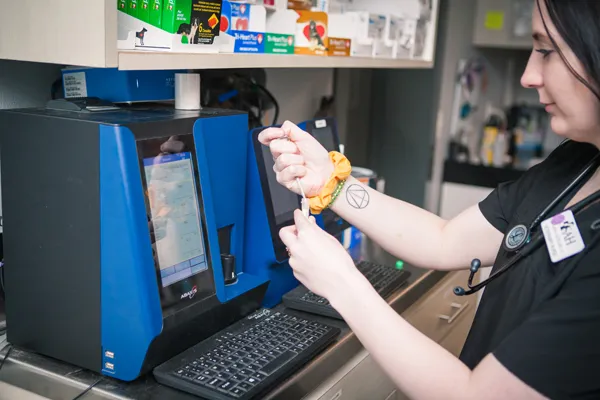
Welcome to Smithers Animal Hospital-Lincoln, where urinalysis is part of our in-clinic diagnostic laboratory, helping our veterinarian get to the bottom of urinary signs and keep an eye on your pet’s kidney health.
Understanding Urinalysis
A urine sample can tell us a great deal about your pet’s health. Urinalysis looks at how concentrated the urine is, checks for substances such as sugar, protein and blood, and examines the sample under a microscope for cells, crystals and bacteria. Together, these results help our veterinarian evaluate kidney function and look for urinary tract infections, bladder stones, diabetes and other conditions.
The quick turnaround of in-house testing makes it possible for our veterinarian to give you a diagnosis and start treatment on the same day. Urinalysis is often paired with bloodwork, since the two together give a fuller picture of how your pet’s kidneys and other organs are working.
Urinalysis is one part of our in-clinic diagnostics, along with bloodwork, heartworm and parasite testing, tick-borne disease testing and more.
What to Expect With a Urine Test
A urinalysis is simple and painless for most pets. Here’s what the process looks like:
Collecting the Sample
A urine sample can be caught as your pet urinates, or collected at the clinic. Our veterinarian will let you know the best method for your pet, and if you’re bringing a sample from home, ask us how to collect and store it so the results are accurate.
Running the Test
The sample is checked here in our in-house laboratory. Annual tests are performed in-house, while certain specialty items are sent to outside lab facilities, and we’ll let you know if your pet’s sample needs one.
Talking Through Results
Our veterinarian will explain what the results show and recommend treatment or follow-up if anything needs attention.
Rechecks When Needed
Some pets need a repeat urinalysis to make sure a problem, such as an infection, has fully cleared.

Why Urinalysis Is Important for Your Pet
Call us if your pet is urinating more often or in larger amounts, straining, having accidents in the house, drinking more water than usual or passing urine that looks bloody or smells unusually strong. These can be signs of a urinary problem or another illness that needs attention.
- Finds hidden problems such as infections, crystals, and early signs of kidney disease or diabetes
- Same-day answers from our in-house laboratory, so treatment can start sooner
- Completes the picture when paired with bloodwork
- Builds a baseline so our veterinarian can recognize a significant change over time
- Supports senior pets and pets with ongoing conditions through routine screening
We recommend annual diagnostic testing so our veterinarian has baseline information about your pet and can recognize a significant change that points to an underlying condition or disease. Urinalysis fits easily into senior and wellness care.
Schedule Your Pet’s Urinalysis Today
If you’ve noticed changes in your pet’s drinking or bathroom habits, let us know when you call. We’ll tell you whether to bring a sample from home and how to keep it fresh.
Call us at (479) 824-3299 or visit us at 2157 E Pridemore Dr. in Lincoln. We’re open Monday through Thursday 7:30am–5:30pm and Friday 7:30am–5:00pm.
Urinalysis: Frequently Asked Questions
What can a urinalysis detect in my pet?
A urinalysis can help our veterinarian look for urinary tract infections, crystals that may lead to bladder stones, signs of kidney disease, sugar in the urine that can point to diabetes, and blood or protein that shouldn’t be there. It’s a simple test that gives a lot of useful information about your pet’s health.
How do I collect a urine sample from my dog or cat at home?
For dogs, a clean, shallow container slipped under the stream during a walk usually works. For cats, ask us about non-absorbent litter. Fresh samples give the most accurate results, so bring it in as soon as you can and ask our team how to store it until then. Some tests require collecting the sample at the clinic.
What signs mean my pet should have a urine test?
Watch for frequent urination, straining, accidents in the house, urinating outside the litter box, blood in the urine, a strong odor or drinking much more water than usual. Any of these can signal a urinary or other health problem, so call us to have your pet checked.
Why is urinalysis done along with bloodwork?
Bloodwork and urinalysis look at your pet’s health from two angles. For example, how concentrated the urine is helps our veterinarian interpret kidney values on a chemistry panel. Running both together gives a more complete picture and can catch problems that one test alone might miss.
How do I schedule a urinalysis for my pet and what are your hours?
Call us at (479) 824-3299 to book a visit, or stop by 2157 E Pridemore Dr. in Lincoln, and let us know about any urinary signs you’ve noticed. We’ll tell you whether to bring a sample from home. We’re open Monday through Thursday 7:30am–5:30pm and Friday 7:30am–5:00pm.