
Diagnostic Care
Tick-Borne Disease Testing in Lincoln, AR
Welcome to Smithers Animal Hospital-Lincoln, where testing for tick-borne diseases such as Ehrlichia is part of our in-clinic diagnostic laboratory, helping pets who love the outdoors stay healthy.
Understanding Tick-Borne Disease Testing
Ticks do more than bite. They can pass serious infections to dogs and other pets, and the signs of illness are often vague and easy to miss. Ehrlichia is one of these infections. It affects the blood cells and can cause fever, low energy, poor appetite and, in some cases, bleeding problems. Other tick-borne diseases can bring on lameness, swollen joints and other symptoms that come and go.
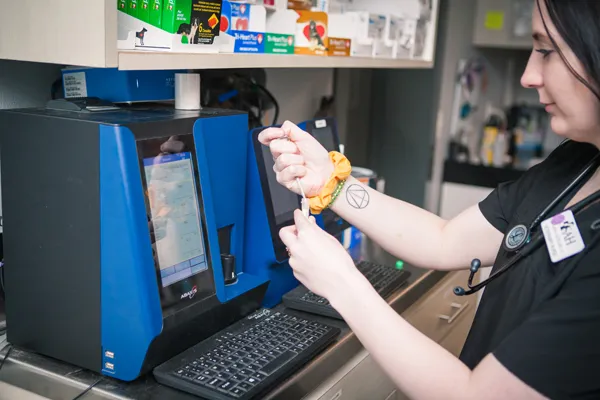
Because the test is run in-house, the quick turnaround makes it possible for our veterinarian to give you a diagnosis and start treatment on the same day. Finding a tick-borne infection early gives your pet the best chance at a smooth recovery.
Tick-borne disease testing is one part of our in-clinic diagnostics, along with bloodwork, heartworm and parasite testing, urinalysis and more.

What to Expect When Your Pet Is Tested
Testing is quick, and our team will explain each step:
A Small Blood Sample
Tick-borne disease testing uses a small blood sample, drawn quickly by our team. It can often be run alongside other routine tests from the same sample.
Looking at the Whole Picture
Our veterinarian considers the test along with your pet’s exam, history and any other bloodwork. Tick-borne diseases can affect blood counts, so a complete blood count and chemistry panel may be recommended too. Let us know if your pet takes a tick preventive, and which one.
Treatment and Follow-Up
If your pet tests positive, we’ll explain what the result means, recommend treatment and talk about follow-up testing if needed.
A Plan for Positive but Healthy Pets
Some pets test positive without being sick, and our veterinarian will help you decide on the best plan for your pet’s health.

Why Tick-Borne Disease Testing Matters
Any pet that spends time in yards, fields, woods or tall grass can pick up ticks, and many tick bites go unnoticed. Testing is especially helpful for dogs that hike, hunt or work outdoors, pets that have had ticks found on them, and pets showing signs like fever, tiredness, limping or loss of appetite without a clear cause.
- Finds infections that hide behind vague or on-and-off symptoms
- Same-day answers from our in-house laboratory
- Earlier treatment, which gives your pet the best chance at a smooth recovery
- A yearly baseline so our veterinarian can spot changes early
- Prevention guidance tailored to how and where your pet spends time outdoors
We recommend annual diagnostic testing so our veterinarian has baseline information about your pet and can spot changes early. Year-round tick prevention, checking your pet for ticks after time outside and removing them promptly all lower the risk of infection. Testing fits easily into your pet’s yearly exam.
Schedule Your Pet’s Tick-Borne Disease Test Today
Testing can be added to your pet’s annual check-up, or scheduled sooner if your pet isn’t feeling well or you’ve found ticks.
Call us at (479) 824-3299 or visit us at 2157 E Pridemore Dr. in Lincoln. We’re open Monday through Thursday 7:30am–5:30pm and Friday 7:30am–5:00pm.
Tick-Borne Disease Testing: Frequently Asked Questions
What is Ehrlichia?
Ehrlichiosis is an infection spread by ticks, most often affecting dogs. The bacteria infect white blood cells and can cause fever, lethargy, poor appetite, weight loss and sometimes bleeding problems such as nosebleeds or bruising. Some dogs carry the infection quietly for a long time before signs appear, which is why testing matters.
What are the signs of a tick-borne disease in my pet?
Signs can be vague and may come and go. Watch for fever, tiredness, loss of appetite, limping or stiffness, swollen joints, swollen lymph nodes, unusual bruising or nosebleeds. If your pet shows any of these, especially after spending time outdoors or after you’ve found a tick, call us so our veterinarian can take a look.
My pet tested positive but seems fine. What does that mean?
A positive test means your pet has been exposed to the infection, but not every exposed pet becomes sick. Our veterinarian will look at your pet’s exam and other test results to decide whether treatment, monitoring or follow-up testing is the best next step, and we’ll walk you through the plan.
How can I protect my pet from ticks?
Keep your pet on a tick preventive recommended by your veterinarian, check your pet for ticks after walks or time in tall grass and wooded areas, and remove any ticks promptly. Keeping grass mowed and brush cleared around your home helps too. Annual testing gives an extra layer of protection by catching infections early.
How do I schedule tick-borne disease testing and what are your hours?
Call us at (479) 824-3299 to set up a visit, or stop by 2157 E Pridemore Dr. in Lincoln. Testing can be added to your pet’s annual check-up, or scheduled sooner if your pet isn’t feeling well or you’ve found ticks. We’re open Monday through Thursday 7:30am–5:30pm and Friday 7:30am–5:00pm.