
Diagnostic Care
Ultrasound in Lincoln, AR
Welcome to Smithers Animal Hospital-Lincoln, where our veterinary team uses advanced ultrasound technology to provide clear answers for your pet’s health concerns.
Understanding Ultrasound
Ultrasound is a safe, non-invasive imaging tool that allows our veterinarians to see inside your pet’s body in real time. Using sound waves, ultrasound creates detailed images of organs and tissues without radiation. This advanced diagnostic method helps us evaluate the heart, liver, kidneys, bladder, and other vital structures.
At Smithers Animal Hospital-Lincoln, our veterinary team relies on ultrasound to diagnose conditions such as abdominal masses, organ diseases, pregnancy, and fluid accumulation. It’s especially valuable when blood tests or X-rays do not provide enough information. Ultrasound can also help guide biopsies or other procedures with precision.
By choosing veterinary ultrasound in Lincoln, you’re giving your pet the benefit of early detection and accurate diagnosis. This means we can develop targeted treatment plans and help your pet feel better, faster. Ultrasound is painless and usually does not require sedation, making it a comfortable option for most pets.

What to Expect During Your Pet’s Ultrasound Appointment
When you schedule a pet ultrasound in Lincoln, our veterinary team focuses on comfort, accuracy, and clear communication every step of the way.
Initial Consultation and Assessment
Our veterinarians begin with a thorough review of your pet’s medical history and current symptoms. We discuss your concerns and explain how ultrasound can help. This step ensures the exam addresses your pet’s unique needs and provides meaningful results.
Preparing Your Pet for Imaging
To obtain clear images, a small area of fur may be shaved. For most ultrasounds, pets remain awake and gently restrained; sedation is only used if absolutely necessary for comfort or accuracy. Our team ensures your pet feels safe and calm throughout the process.
Performing the Ultrasound
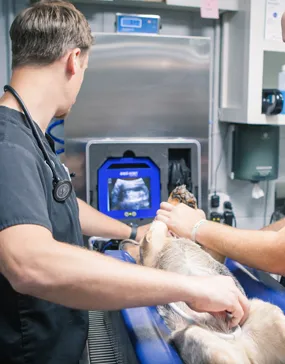
During the procedure, a veterinarian or specially trained team member applies gel to the skin and uses a handheld probe to capture images. We carefully examine the targeted organs or tissues, watching the live images on a monitor to gather vital information about your pet’s health.
Reviewing Results and Next Steps
After the ultrasound, our veterinarians review the images and discuss findings with you. Images can be analyzed by our doctor in real time or shared electronically with specialists, if necessary. If further testing or treatment is needed, we explain your options and answer all your questions. At Smithers Animal Hospital-Lincoln, you can count on clear guidance and compassionate care at every stage.

Why Ultrasound is Important for Your Pet
Ultrasound offers a window into your pet’s health, providing information that cannot be gathered through physical exams or standard X-rays alone. By using veterinary ultrasound in Lincoln, you help ensure that problems are identified early and diagnoses are accurate, which can lead to better outcomes and a higher quality of life for your pet.
Early Detection of Illness
Ultrasound can reveal subtle changes in organs before symptoms appear. Early detection allows for timely treatment, improving your pet’s chances of recovery and minimizing discomfort.
Accurate, Painless Diagnosis
Unlike some diagnostic tests, ultrasound is non-invasive and typically does not require anesthesia. Your pet experiences minimal stress, and our team gathers precise information to guide the best possible care.
Guidance for Targeted Treatments
Ultrasound helps veterinarians monitor existing conditions and guide procedures such as biopsies. This precision leads to more effective treatments and better long-term health outcomes.
Signs Your Pet May Need an Ultrasound
Certain symptoms or changes in your pet’s health may indicate the need for a veterinary ultrasound in Lincoln. If you notice any of the following, contact our team for guidance:
- Unexplained weight loss or appetite changes
- Vomiting or diarrhea that persists
- Abdominal swelling or discomfort
- Changes in urination or drinking habits
- Lethargy or decreased activity
If your pet is experiencing any of these signs, prompt evaluation is important. Ultrasound can help identify underlying issues and guide the right treatment. Please call our office with any concerns.
How Often Should Your Pet Receive an Ultrasound?
Ultrasound is performed as needed based on your pet’s symptoms, age, and medical history. It is not a routine procedure like annual exams or vaccinations. Your veterinarian may recommend ultrasound to investigate specific problems, monitor chronic conditions, or check on pregnancies.
For pets with ongoing health issues or breeds prone to certain diseases, periodic ultrasounds may be advised. Our veterinary team will create a personalized plan for your pet. If you have questions about when to schedule an ultrasound, we are here to help.
Practice Highlights
Smithers Animal Hospital-Lincoln is proud to serve Lincoln and surrounding communities with expert veterinary ultrasound and compassionate care. Here’s what sets us apart:
- Experienced veterinarians, including Dr. Bridger Smithers and Dr. Stan Mosley
- State-of-the-art in-house diagnostic equipment
- Kind, knowledgeable staff who make your pet’s comfort a priority
- Locally owned and independent practice
- Comprehensive care from preventative to advanced diagnostics
- Same-day emergency appointments when available
Schedule Your Pet’s Ultrasound Appointment Today
Give your pet the best care with veterinary ultrasound in Lincoln. Smithers Animal Hospital-Lincoln is conveniently located just past the corner of Main Street and 71 at 2157 E Pridemore Dr.. Call us at (479) 824-3299 to request an appointment. We’re open Monday through Thursday from 7:30am to 5:30pm, and Friday from 7:30am to 5pm. Our team is dedicated to providing the answers and support your pet needs for a healthier, happier life.
Ultrasound: Frequently Asked Questions
What conditions can be diagnosed with veterinary ultrasound?
Veterinary ultrasound can diagnose a wide range of conditions, including organ diseases, abdominal masses, pregnancy, bladder stones, and fluid accumulations. At Smithers Animal Hospital-Lincoln, our team uses ultrasound to evaluate heart health, detect tumors, and guide biopsies. If your pet is showing unexplained symptoms, ultrasound helps us find answers quickly and safely. Call (479) 824-3299 for more information.
How much does a pet ultrasound cost and how long does it take?
The cost of a pet ultrasound varies based on the complexity and area examined. Most ultrasounds at Smithers Animal Hospital-Lincoln take about 30–60 minutes. For a detailed estimate, please contact our team at (479) 824-3299. We accept cash, checks, and Visa, Mastercard, Discover, or American Express, and we partner with Pay With Cherry and Care Credit for financing.
How should I prepare my pet for an ultrasound appointment?
Most pets do not require special preparation for an ultrasound. Occasionally, fasting for several hours may be recommended for abdominal scans. Our team will provide specific instructions if needed. If you have questions before your visit, call (479) 824-3299 for guidance.
Can ultrasound help monitor ongoing health conditions or chronic disease?
Yes, ultrasound is an excellent tool for monitoring chronic health conditions such as heart disease, liver problems, or tumors. At Smithers Animal Hospital-Lincoln, our veterinarians use ultrasound to track changes over time and guide adjustments in treatment. Regular imaging can help ensure your pet receives the best possible care.
How do I schedule an ultrasound and what are your hours?
To schedule a veterinary ultrasound, call Smithers Animal Hospital-Lincoln at (479) 824-3299 or visit us at 2157 E Pridemore Dr.. We’re open Monday–Thursday 7:30am–5:30pm and Friday 7:30am–5pm. Our team is here to help you and your pet.